
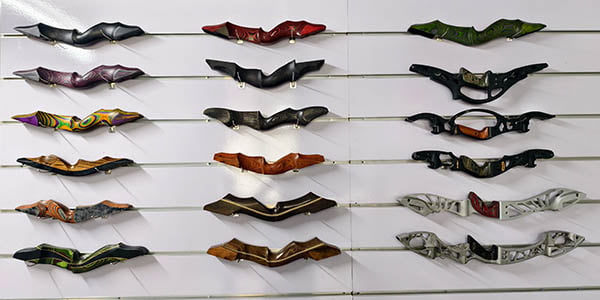
Evaluating recurve bow performance across seasonal shifts often reveals unexpected tuning drift, limb fatigue, and velocity changes that frustrate archers and brand owners alike. When environmental conditions compromise equipment consistency, brand reputation suffers in competitive markets. Understanding how thermal fluctuations interact with composite limbs, bonded risers, and strings provides the baseline solution for engineering stable, reliable archery equipment.
Temperature affects recurve bow performance primarily by altering material stiffness, resin bond elasticity, and string creep rather than acting as a single universal variable. In general, colder environments may stiffen composite laminates and raise draw weight slightly, while elevated heat softens matrix resins and adhesive layers1, potentially slowing arrow speed and shifting the dynamic spine balance.
In our OEM manufacturing consultations, brand product managers frequently ask whether a single operating range applies to all bows. The reality is more nuanced. To build resilient products, buyers must examine the relationship between multi-layer construction, material properties, and thermal exposure before finalizing production specifications.
Why Does Temperature Impact Recurve Bow Performance Across Different Materials?
Sourcing managers often face unexpected field returns when bows perform well in climate-controlled testing but fail in cold winter ranges or hot summer tournaments. These discrepancies cause warranty disputes and brand friction. Solving this requires understanding that different core and backing materials expand, contract, and flex at unequal rates under thermal exposure.
Thermal fluctuations alter recurve bow performance because individual raw materials—such as fiberglass, carbon fiber, stabilized wood laminates, and aluminum risers—possess distinct coefficients of thermal expansion and modulus changes. As ambient temperatures shift, these differential physical responses alter dynamic limb flex, overall mass distribution, and vibrational damping characteristics during the shot cycle.
When developing custom risers and limbs for overseas brands, I often discuss how raw material selection governs thermal tolerance. Archery gear relies on mechanical energy storage and rapid recovery. Temperature alters these dynamics through fundamental physics:
Differential Coefficients of Thermal Expansion (CTE)
Every material in a recurve bow expands with heat and contracts with cold at a specific rate. In our CNC machining workflows, we observe that aluminum alloys expand at roughly $23 times 10^{-6}/text{K}$, while longitudinal carbon fiber composites expand at near-zero or even slightly negative rates along their fiber axis2. When these materials are combined or mounted together, sudden temperature shifts induce internal stresses across joints and limb pockets.
Modulus of Elasticity and Material Hardness
The elastic modulus ($E$) defines how much a material deflects under a given load.
- Fiberglass and Carbon Laminates: As temperatures drop significantly below freezing, polymers and matrix resins tend to contract and stiffen. This change may yield a marginal rise in dynamic draw weight and hand shock. Conversely, elevated heat can lower the flexural modulus of fiber composites, resulting in subtle arrow cast reduction.
- Engineered Wood and Natural Laminates: Colored laminated woods (actionwood) impregnated with phenolic or epoxy resins offer superior thermal stability compared to natural hardwoods.3 However, un-stabilized woods remain hygroscopic; ambient heat often drives off moisture, altering limb mass and spine dynamic response.
- Dense Composite Risers (G10 and Micarta): High-pressure glass-epoxy composites (G10) maintain dimensional tolerances across broad temperature swings.4 They transfer minimal thermal expansion into the limb pocket alignment, making them an excellent choice for hunting or field archery where weather swings are common.
| Material Group | General Thermal Sensitivity | Common Behavioral Trend in Heat | Sourcing & QC Consideration |
|---|---|---|---|
| High-Pressure Phenolic / G10 | Low | High dimensional stability; negligible softening | Ideal for stable riser geometries; check total mass |
| Actionwood (Resin-Impregnated) | Moderate | Resists warping better than raw timber; minimal creep | Verify full resin saturation during incoming inspection |
| Fiberglass Laminates | Moderate | Matrix resin may soften if exposed to severe surface heat | Check backing thickness consistency and fiber alignment |
| Woven / Unidirectional Carbon | Low to Moderate | Excellent recovery; performance tied to bonding epoxy | Confirm layup orientation to prevent torsional twist |
| Cast / CNC Aluminum (Risers) | Low (Structural) | Expands predictably; affects limb pocket tolerances | Specify CNC machining tolerances for limb alignment pins |
How Do Adhesives and Composite Layers Influence Recurve Bow Performance Under Thermal Stress?
Nothing damages customer trust faster than structural delamination or limb twist during an outdoor tournament. When buyers overlook glue chemistry and curing schedules, thermal stress breaks the structural bond between core veneers and backing laminates. Ensuring consistent bonding systems prevents limb failure and preserves brand integrity under extreme conditions.
Adhesives directly dictate dynamic recurve bow performance under thermal stress because epoxy resins form the shear-transfer medium between limb layers. If operating temperatures approach an adhesive's glass transition temperature ($T_g$), the resin matrix softens.5 This softening leads to limb creep, irreversible draw weight loss, and potential delamination6, whereas extreme sub-zero cold can induce brittleness.
In my experience reviewing OEM limb layups, the glue line is consistently the most vulnerable zone in thermal cycles. A recurve limb is essentially a flexural spring subjected to high-frequency shear stress. When an archer draws the bow, the back undergoes high tensile strain while the belly experiences severe compressive strain. The epoxy interface must transfer these loads instantly without slipping.
The Role of Glass Transition Temperature ($T_g$)
The glass transition temperature marks the boundary where an amorphous polymer transitions from a hard, glassy state to a rubbery state:
- Standard industrial room-cure epoxies may exhibit a $T_g$ as low as $50^circtext{C}$ to $60^circtext{C}$ ($122^circtext{F}$ to $140^circtext{F}$).7
- High-performance, heat-cured laminating epoxies formulated for dynamic archery limbs generally achieve a $T_g$ exceeding $80^circtext{C}$ to $100^circtext{C}$ ($176^circtext{F}$ to $212^circtext{F}$), subject to laboratory confirmation.
- If a bow sits inside a closed vehicle in summer, trunk temperatures can exceed $65^circtext{C}$ ($150^circtext{F}$)8. Under these conditions, lower-grade resin systems soften. If the bow remains strung, the limbs will permanently take set or twist along their longitudinal axis.
Interlaminar Shear Under Temperature Cycles
When heating occurs unevenly—such as when one side of a limb faces direct sun—the outer composite layer expands while the inner core remains cool. This thermal gradient creates localized shear forces along the adhesive boundary:
- Micro-Cracking: Repeated thermal cycling without proper post-curing can generate micro-fractures in brittle adhesive bonds.
- Limb Twist: Uneven shear release across the limb width causes the tip to track off-center, ruining string groove tracking and arrow flight.
- Catastrophic Failure: Prolonged thermal exposure combined with high draw cycle frequency can result in sudden delamination.
During supplier evaluation, buyers should never assume an adhesive system is robust simply because the outer fiberglass looks smooth. Demanding verification of high-temperature laminating epoxies and controlled oven-curing profiles is an essential procurement safeguard.
What Environmental Factors Beyond Ambient Heat Alter Perceived Recurve Bow Performance?
Archers often blame limb construction whenever their sight marks drift during a shoot, creating frustrating, non-reproducible warranty complaints for distributors. Isolating the true cause requires looking beyond the ambient thermometer. Examining string material creep, storage conditions, and human physical responses helps brand teams diagnose field performance reports accurately.
Perceived changes in recurve bow performance frequently stem from secondary environmental factors rather than core limb structural failure alone. High humidity affects unsealed natural veneers, direct ultraviolet exposure causes localized thermal spikes, and polymeric bowstrings stretch in direct sunlight. Furthermore, archer muscle fatigue and joint stiffness in cold environments frequently distort perceived draw weight.
When handling quality inquiries from overseas distributors, I always encourage a full-system audit before blaming the riser or limbs. Field performance reflects an interconnected dynamic system consisting of the bow, string, accessories, environment, and human archer.
1. Bowstring Creep and Thermal Expansion
The bowstring exerts continuous tension on the bow tips even at brace height. Most modern strings are manufactured from High Modulus Polyethylene (HMPE) or liquid crystal polymers:
- Polyethylene Sensitivities: HMPE fibers have excellent tensile strength, but non-blended compositions are susceptible to creep under sustained tension in hot environments.9
- Brace Height Changes: A mere 2 mm to 3 mm change in brace height caused by string stretch changes the power stroke, alters dynamic arrow spine, and moves the archer's point of impact down at 50 or 70 meters.10
2. Localized Solar Radiance
Ambient air temperature measured in the shade is often misleading:
- A black carbon limb resting on an open bow stand under direct sunlight absorbs solar radiation rapidly.
- Dark surfaces can reach temperatures $15^circtext{C}$ to $25^circtext{C}$ higher than the surrounding ambient air.11
- This creates uneven temperature distribution between the top and bottom limbs, causing the bow to shoot high or low due to transient tiller imbalances.
3. Biological and Biomechanical Variables
Archers are not mechanical shooting machines. Cold conditions directly degrade human athletic output:
- Muscle Contraction Speed: Muscle viscosity increases and nerve conduction velocity slows in cold weather.12
- Draw Length Inconsistency: Bulky winter jackets and stiff shoulder joints often shorten an archer's dynamic draw length by $0.25$ to $0.5$ inches.
- When an archer reports that a bow "feels 4 pounds heavier in freezing temperatures," the actual limb increase measured on an industrial scale might only be $0.5$ pounds; the remaining discrepancy is often biomechanical perception.
How Can OEM Buyers Validate Recurve Bow Performance for Extreme Climates?
Launching a new bow model without rigorous environmental validation risks catastrophic warranty recalls and damaged dealer relationships. Generic supplier assurances are rarely sufficient when products ship to varied geographic markets. Establishing structured sample verification protocols ensures that finished recurve bows withstand real-world transport, storage, and competitive conditions.
OEM buyers can validate recurve bow performance by integrating targeted thermal pre-conditioning and environmental stress cycles into standard pre-production inspection. This involves testing prototypes for dimensional stability, limb straightness, draw weight retention, and dry-fire/fatigue resistance across defined high-heat and sub-zero temperature thresholds before approving tooling or authorizing full-scale manufacturing runs.
From a manufacturing perspective, relying solely on laboratory raw-material spec sheets is dangerous. Raw composite performance rarely matches the behavior of an assembled, stressed recurve bow. In our OEM project scoping, we recommend that clients define clear environmental testing parameters during the prototyping and golden-sample stages.
Pre-Production Environmental Testing Matrix
Brand procurement teams should collaborate with their factory partners to define an agreed testing protocol:
[Raw Material Quality Control]
              │
              ▼
[Sample Layup & Controlled Oven Cure]
              │
              ▼
[Environmental Pre-Conditioning Chamber]
   ├─ High Heat Storage (Simulated Vehicle Trunk)
   ├─ Sub-Zero Cold Soak (Simulated Winter Hunt)
   └─ Cyclic Humidity Exposure
              │
              ▼
[Mechanical Validation & Tolerances]
   ├─ Draw Weight & Dynamic Tiller Check
   ├─ High-Speed Laser Straightness Verification
└─ Dynamic Fatigue Cycling (Dry-Fire / Endurance)| Evaluation Stage | Conditioning Target (Pending Buyer Protocol) | Target Inspection Point | Commercial Tolerance Goal |
|---|---|---|---|
| High-Temp Storage Test | Unstrung soak at $60^circtext{C} pm 2^circtext{C}$ for 24–48 hours | Delamination check; straightness check on granite plate | Zero delamination; lateral deviation $< 0.5text{ mm}$ |
| Heat / Load Creep Test | Strung at recommended brace height at $45^circtext{C}$ for 4 hours | Measure brace height and draw weight immediately after | Weight loss $< 1.5%$; no permanent limb twist |
| Cold Brittleness Test | Unstrung cold soak at $-20^circtext{C}$ for 12 hours | Flex cycle to full draw on dynamic test draw rig | Zero surface cracking; no splintering at glue boundary |
| Thermal Shock Cycle | Alternating $-10^circtext{C}$ to $+50^circtext{C}$ (3 continuous cycles) | Inspect clear-coat finish, limb tip overlays, and bushings | Zero finish crazing; insert bushings remain tight |
Clear Commercial Alignment on Acceptance Criteria
To avoid disputes, your supply contract or Technical Data Sheet (TDS) should address three specific points:
- Define Operating vs. Storage Boundaries: Make sure customer product manuals clearly distinguish between safe shooting temperatures (e.g., $-10^circtext{C}$ to $+40^circtext{C}$) and abusive storage conditions (e.g., strung bows left in closed cars).
- Limb Straightness Baselines: Measure limb straightness before and after thermal testing using an aluminum beam alignment jig or coordinate measuring machine.
- Batch Traceability: Ensure each production batch links to specific resin lots and curing records, allowing quick root-cause diagnosis if field problems emerge.
Frequently Asked Questions
Does cold weather permanently damage recurve bow limbs?
Cold weather rarely causes permanent damage on its own unless the limbs are dry-fired or struck against hard surfaces. Sub-zero temperatures temporarily increase polymer stiffness and reduce impact resistance. Allow cold limbs to return gradually to ambient room temperature before inspection or prolonged adjustment.
Can leaving a recurve bow in a hot vehicle ruin its performance?
Yes. Closed vehicle interiors often exceed $65^circtext{C}$ ($150^circtext{F}$) under direct summer sun. High heat softens limb laminating epoxies. If the bow is stored under string tension, this heat induces permanent limb twist, profile warping, or catastrophic delamination that cannot be repaired.
How does bowstring material influence temperature sensitivity?
Synthetic string fibers, particularly non-blended HMPE formulations, experience thermal expansion and structural creep under sustained tension in warm conditions. This stretch reduces brace height, altering the bow's dynamic power stroke and casting arrows lower, which archers often mistake for limb failure.
Should archers adjust brace height when temperature fluctuates?
Yes. Archery technicians frequently check and twist strings to maintain specified brace height as ambient conditions shift. Keeping brace height consistent stabilizes arrow departure clearance and dynamic tiller, isolating the bow from external string stretch during seasonal tournaments.
Conclusion
Temperature should never be treated as an unpredictable wild card in archery equipment design. While thermal shifts inevitably influence material stiffness, epoxy shear resilience, and string elongation, these factors can be engineered, controlled, and validated. By shifting the conversation from broad assumptions to rigorous material selection, adhesive glass-transition verification, and structured environmental testing, brand owners can deliver reliable equipment to global markets.
At Fengtuo Industry, we specialize in OEM/ODM custom recurve bow risers, composite limbs, and precision multi-material outdoor components. Whether you are developing an engineered laminated wood series or high-performance composite designs, contact our engineering team to review your technical drawings and environmental validation standards today.
"A Systematic Stiffness-Temperature Model for Polymers and ...", https://vtechworks.lib.vt.edu/items/6eead707-4515-449e-8311-689334ace8d4. A materials-science source on polymer-matrix composites should be cited here to support that composite stiffness and resin-dominated mechanical behavior vary with temperature, especially near the matrix glass-transition region. Evidence role: mechanism; source type: paper. Supports: Temperature changes alter the stiffness of polymer-matrix composites and can reduce resin-dominated mechanical properties as temperatures approach or exceed the resin glass transition range.. Scope note: The source would support the material mechanism generally; it would not directly measure recurve bow draw weight or arrow velocity. ↩
"Transverse thermal expansion of carbon fiber/epoxy matrix ...", https://ntrs.nasa.gov/citations/19840066265. Engineering reference data should be cited to substantiate the stated order-of-magnitude CTE contrast between aluminum alloys and longitudinal carbon-fiber composites. Evidence role: statistic; source type: research. Supports: Reference data should confirm typical thermal expansion coefficients for aluminum alloys and the low or negative longitudinal CTE reported for carbon-fiber-reinforced composites.. Scope note: Exact CTE values depend on alloy grade, fiber type, resin system, fiber volume fraction, and layup orientation. ↩
"Humidity's effect on the dynamic-mechanical behavior of ...", https://bioresources.cnr.ncsu.edu/resources/humiditys-effect-on-the-dynamic-mechanical-behavior-of-phenol-formaldehyde-impregnated-beech-wood-veneer/. A wood-science study should be cited to support the general proposition that resin impregnation and lamination improve the dimensional stability of wood-based components compared with untreated hardwood. Evidence role: general_support; source type: paper. Supports: Wood-science literature should support that resin impregnation and lamination can improve dimensional stability and reduce moisture-related movement relative to untreated wood.. Scope note: The evidence would be contextual unless it evaluates the specific commercial material called actionwood or tests archery limbs directly. ↩
"cryogenic material properties G-10 CR (Fiberglass Epoxy)", https://trc.nist.gov/cryogenics/materials/G-10%20CR%20Fiberglass%20Epoxy/G10CRFiberglassEpoxy_rev.htm. A neutral materials-property reference should be cited to support that G10 glass-epoxy laminates have comparatively low and predictable thermal expansion suitable for dimensional-stability discussions. Evidence role: general_support; source type: research. Supports: A technical materials reference should document the thermal expansion and dimensional behavior of G10 or comparable glass-epoxy laminates.. Scope note: Such data describe flat laminate material behavior and may not directly predict tolerances in a machined recurve riser under assembled loads. ↩
"Polymers - csbsju - College of Saint Benedict", https://faculty.csbsju.edu/cschaller/Advanced/Polymers/CPtime.html. A polymer-science reference should be cited to define glass transition temperature as the range in which an amorphous polymer changes from a glassy to a more rubbery mechanical response. Evidence role: definition; source type: education. Supports: A polymer-science source should define glass transition temperature and explain the associated reduction in stiffness or softening of amorphous polymer phases.. Scope note: The source would explain the underlying polymer behavior, not prove that a particular bow adhesive reaches Tg in normal field use. ↩
"Effect of Thermal Ageing on the Impact and Flexural Damage ...", https://pmc.ncbi.nlm.nih.gov/articles/PMC6402028/. A study of adhesive-bonded composites should be cited to support the mechanism by which elevated temperature reduces adhesive stiffness or strength and can contribute to creep and delamination. Evidence role: mechanism; source type: paper. Supports: Composite and adhesive-bonding studies should show that elevated temperature can reduce adhesive stiffness and strength, increasing creep or delamination risk in bonded laminates.. Scope note: The evidence would address bonded composite structures generally, rather than quantifying irreversible draw-weight loss in recurve limbs. ↩
"Improving Glass Transition Temperature and Toughness of ...", https://pmc.ncbi.nlm.nih.gov/articles/PMC9864282/. A polymer-characterization source should be cited to substantiate that room-temperature-cured epoxies may have glass-transition temperatures in the approximate 50–60°C range. Evidence role: statistic; source type: paper. Supports: A polymer or adhesive characterization source should document that some room-temperature-cured epoxy systems can have Tg values around 50–60°C.. Scope note: Tg varies substantially with formulation, mix ratio, cure schedule, post-cure, and measurement method. ↩
"Hot cars can hit deadly temperatures in as little as one hour", https://news.asu.edu/20180516-discoveries-asu-study-hot-cars-can-hit-deadly-temperatures-within-one-hour. A public-health or transportation study should be cited to support that enclosed vehicles can attain temperatures around or above 65°C under direct summer sun. Evidence role: statistic; source type: government. Supports: A public-health or transportation source should document that enclosed vehicles can reach or exceed approximately 65°C during hot sunny conditions.. Scope note: Vehicle temperature depends on ambient conditions, solar load, vehicle color, ventilation, measurement location, and exposure duration. ↩
"Ultra-high-molecular-weight polyethylene", https://en.wikipedia.org/wiki/Ultra-high-molecular-weight_polyethylene. A fiber-mechanics study should be cited to support that HMPE/UHMWPE fibers combine high tensile strength with measurable creep under sustained loading, and that temperature can accelerate this behavior. Evidence role: mechanism; source type: paper. Supports: Research on HMPE or UHMWPE fibers should support that they have high tensile strength but exhibit creep under sustained load, particularly with elevated temperature.. Scope note: The source would address fiber behavior generally; bowstring construction, strand count, coatings, and blends can change the magnitude of creep in practice. ↩
"Set your Recurve Brace Height like a Pro | Archery Tuning ...",
. An archery tuning reference should be cited to support that changes in brace height affect the bow’s power stroke and arrow launch conditions, which can shift point of impact at longer distances. Evidence role: general_support; source type: institution. Supports: An authoritative archery tuning or biomechanics source should support that brace height affects power stroke, arrow clearance, launch behavior, and point of impact.. Scope note: The exact 2–3 mm threshold and the size of the point-of-impact shift depend on bow setup, arrow mass, draw length, release quality, and distance. ↩"Temperature Profiles of Sunlight-Exposed Surfaces in a ... - PMC", https://pmc.ncbi.nlm.nih.gov/articles/PMC10211493/. A heat-transfer or environmental-measurement source should be cited to support that dark surfaces under direct solar radiation can become markedly hotter than the surrounding air. Evidence role: statistic; source type: research. Supports: Environmental or heat-transfer research should show that dark, sunlit surfaces can reach temperatures substantially above ambient air temperature.. Scope note: The 15–25°C range is context dependent and varies with solar irradiance, wind, humidity, material emissivity, surface finish, and exposure time. ↩
"Effects of Cooling on Ankle Muscle Strength ... - PMC", https://pmc.ncbi.nlm.nih.gov/articles/PMC4590893/. An exercise-physiology or neuromuscular study should be cited to support that cold exposure can slow nerve conduction and impair muscle contractile performance. Evidence role: mechanism; source type: paper. Supports: Physiology research should support that cooling affects neuromuscular function, including slower nerve conduction and altered muscle mechanical properties.. Scope note: The evidence would support the biological mechanism generally, not quantify the perceived draw-weight increase in archers. ↩
