Securing dependable after-sales support & warranty terms is one of the most nerve-wracking parts of sourcing custom components overseas. Many growing brands fear that a Chinese supplier will vanish or deflect blame the moment a defect arises. That uncertainty stalls growth, but setting concrete warranty protocols before production eliminates cross-border anxiety entirely.
In custom OEM/ODM manufacturing, after-sales support & warranty is not an unconditional return policy; it is a structured, pre-agreed quality framework. It defines clear acceptance criteria during sample approval, establishes allowable defect thresholds, separates transit damage from factory defects, and sets transparent protocols for remakes, credits, or engineering support when non-conforming parts occur.
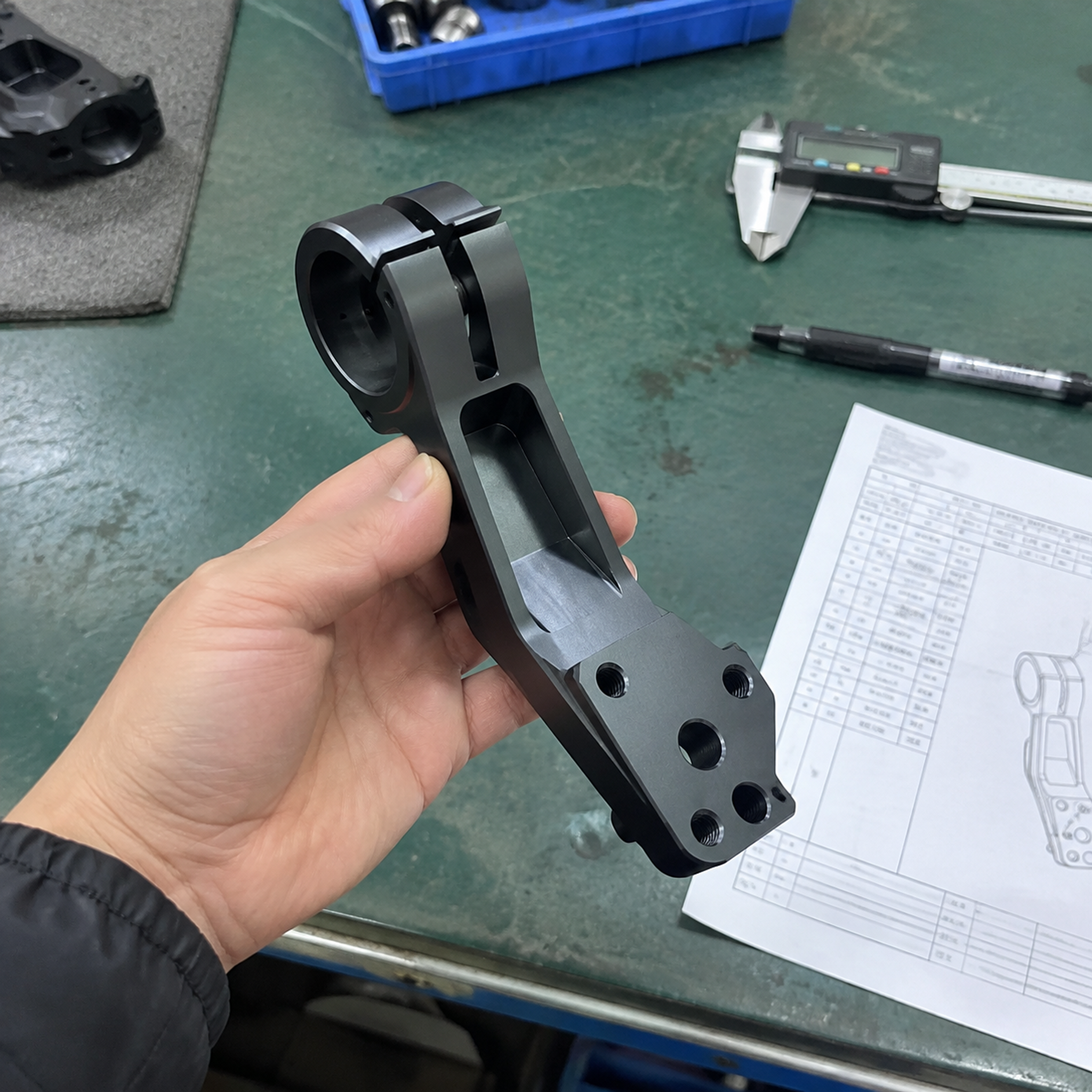
Finding out that parts do not fit your assembly after shipping across the ocean is every procurement manager's nightmare. Let us explore how custom component warranties function in practice, so you can protect your inventory investments without relying on empty vendor promises.
Why Does Custom Manufacturing Change After-Sales Support & Warranty?
Sourcing custom CNC risers or multi-material handles feels risky when suppliers refuse standard return policies. You worry about being stuck with dead inventory that you cannot sell. The friction occurs because custom manufacturing produces unique, non-resellable inventory tied directly to your unique CAD files and material specifications1.
Custom manufacturing changes after-sales support & warranty because engineered parts have zero secondary market value. Factories cannot simply restock custom components.2 Therefore, realistic warranty programs focus on pre-production quality verification3, scrap tolerance thresholds, and dedicated corrective action plans rather than catalog-style unconditional refunds or open return windows.
The Reality of Bespoke Production Runs
In consumer retail, a buyer can return an unwanted item because the merchant simply places it back on the shelf. In custom manufacturing, every purchase order represents dedicated tooling, machine time, and raw material procurement4.
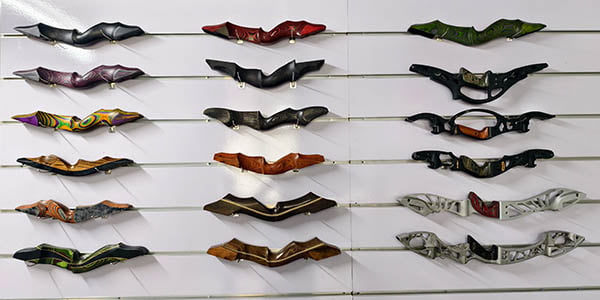
When we machine a batch of recurve bow risers at Fengtuo Industry from colored laminated wood or G10, those components are crafted specifically to your brand's limb pocket geometry, grip ergonomics, and weight balance. If those parts leave our facility, we cannot liquidate them to another buyer.
Because of this reality, an experienced OEM/ODM factory will never promise "30-day unconditional returns." Any supplier that offers blanket, no-questions-asked returns on custom-machined parts is likely inflating their initial unit prices drastically to offset massive risk, or making promises they intend to ignore if a dispute arises.
| Dimension | Standard Catalog Procurement | Custom OEM/ODM Component Sourcing |
|---|---|---|
| Inventory Liquidity | High (can be restocked and resold) | Zero (machined exclusively to client specs) |
| Warranty Mechanism | Product return, exchange, or store credit | Rework, batch balance credits, remakes |
| Quality Baseline | Standardized manufacturer catalog sheet | Physical golden sample and approved 2D drawings |
| Risk Mitigation Point | Post-purchase return window | Pre-production prototyping and in-process QC |
| Typical Remedies | 100% money-back or product return | Root-cause analysis, defect offsets, corrective runs |
Reframing Warranty as Risk Architecture
Instead of viewing after-sales protection as an insurance policy you cash in after disaster strikes, view it as an operating protocol.
When you purchase custom hardware, your warranty actually consists of:
- Approved technical tolerances: Defining the permissible variation in dimensions (such as ±0.05 mm on critical pin holes).
- Material integrity confirmations: Ensuring composite layers, resin bonds, or metallic alloys meet agreed stability expectations.
- Surface finish agreements: Documenting acceptable cosmetic variance on natural or multi-layer materials like laminated birch.
By shifting your attention to measurable parameters before cutting raw billets, you eliminate the gray areas where standard warranties collapse.
How Do You Separate Shipping Damage from Production Defects in After-Sales Support & Warranty Claims?
Opening an import carton only to discover chipped risers or cracked resin triggers immediate frustration. Buyers often assume the factory cut corners, while factories often blame rough freight handlers. This standoff damages supplier partnerships, but establishing clear evidence protocols clarifies responsibility instantly.
To resolve after-sales support & warranty claims fairly, buyers and suppliers must evaluate container conditions upon delivery and compare damage patterns. Structural material flaws or dimensional out-of-tolerance issues represent production liabilities, whereas crushed packaging, exterior friction scuffs, and puncture marks point directly toward transit mishaps requiring freight claim protocols.
Defining Responsibility Boundaries
In international logistics, cargo moves across multiple touchpoints: factory loading, port drayage, ocean vessel or air hold, customs inspection warehouses, and final domestic courier networks. Assigning liability requires checking the physical evidence against your agreed shipping terms (such as EXW, FOB, or DDP).5
Here is how we categorize non-conforming items when issues arise:
- Factory Production Defects: These include dimensional errors, incorrect thread tapping, internal voids in cast resin, delamination of laminated wood under normal ambient conditions, or surface coating peeling. If our machining or composite curing process failed, we own that mistake directly.
- Logistics and Handling Damage: These issues manifest as crushed outer master cartons, punctured internal blister packs, corner impacts, moisture intrusion during ocean transit, or sheared pins caused by external shocks6.
Accountable Collaboration: Stepping Up Without Being Taken Advantage Of
A healthy factory-client relationship is built on fairness. We believe in taking full accountability for our work, but no manufacturer can remain viable if it serves as a scapegoat for third-party courier negligence or client assembly errors.
At the same time, "not our contractual fault" should never mean "we abandon you."
"Even when damage occurs during transit or through handling errors outside our facility, a true manufacturing partner does not simply shrug and walk away. We step in to troubleshoot, supply replacement components at direct material cost, or provide priority scheduling on replacement runs."
When freight mishandling damages an incoming order, we actively assist our clients by:
- Providing certified export packaging packing slips and photos of palletized goods before dispatch to support your carrier insurance claim.
- Advising your technical team on whether localized surface scuffs can be buffed, polished, or clear-coated without compromising component strength.
- Fast-tracking raw material allocation to machine replacement parts on our CNC lines at bare-bones material cost, keeping your retail release on track.
Incoming Cargo Issue Detected
│
├── Outer Carton Compromised? (Crushed, wet, punctured)
│   ├── YES ──► Document package BEFORE opening ──► Initiate Carrier Claim
│   │           └── Factory assists with dispatch records & expedited replacement parts
│   │
│   └── NO ──► Inspect Component Internals
│               ├── Out-of-spec dimensions / Delamination? ──► Factory Quality Claim
│               │   └── Root-cause analysis, batch credit, or planned remakes
│               └── Assembly force breakage? ──► Joint Engineering Review
Does Your Sample Approval Define Your After-Sales Support & Warranty Terms?
Moving from a single golden sample to an initial production run of 500 units creates understandable apprehension. Without objective reference points, cosmetic expectations clash and dispute resolution stalls. The golden sample is not just a prototype; it serves as your legally binding baseline for all future warranty assessments.7
Sample approval defines your after-sales support & warranty baseline by establishing measurable aesthetic, dimensional, and functional boundaries. When you sign off on a counter-sample, both parties lock in grain tolerances, surface finish grades, and assembly clearances, transforming subjective quality debates into objective, verifiable quality control benchmarks.
The Golden Sample System in Practice
Whenever we develop custom archery risers or handles, we stress that the sample stage is where warranty protection is won or lost. If a buyer approves a sample casually without verifying assembly fitment or finish tolerances, resolving downstream batch issues becomes significantly harder.
To maintain rock-solid clarity, we utilize a three-part sample protocol:
- The Client Reference Sample: Sent to your facility for physical inspection, mechanical fit testing with your existing mating components, and aesthetic review.
- The Production Reference Sample: Kept on our shop floor next to our machining centers to guide operators on surface texture, edge chamfers, and satin finishes.
- The Archive Master Sample: Sealed in our inspection department alongside initial CMM or caliper inspection sheets to serve as the baseline if questions arise during final packing.
A Real Case: Handling Material Grain and Color Variation
Working with multi-layer materials like dyed laminated birch illustrates why sample baselines matter. In one project, a client received a batch of recurve bow risers and reported that roughly 3% of the units showed natural color variation deeper than expected.
Because both parties held signed master samples, we pulled our archive unit and compared the variation:
- The Finding: We determined that 2% of the variation fell squarely within the approved natural wood absorption range documented during prototyping. Wood fibers take dye differently depending on grain density8, which gives each riser its distinctive look.
- The Production Defect: However, 1% of the risers showed localized pooling caused by an uneven secondary clear-coat run.
- The Resolution: Because we had a documented sample baseline, there was no emotional argument. We immediately acknowledged the coating flaw on that 1%, issued an instant balance credit for those units on their next container, and fine-tuned our spray fixture to prevent future pooling.
| Inspection Element | Sample Verification Objective | Downstream Warranty Protection |
|---|---|---|
| Critical Geometry | Verified via pin gauges and assembly trials | Eliminates debates over mating hole positions and limb pocket angles |
| Cosmetic Finish | Checked under standard 1000-lux inspection lighting9 | Defines acceptable sheen, tool-path micro-marks, and grain transitions |
| Weight & Balance | Weighed on calibrated digital balances | Establishes density baselines for multi-material composite layups |
| Packaging Layout | Verified against drop-test standards10 | Ensures custom inserts protect finished components during rough handling |
What Should You Agree on Before Placing an Order for Clear After-Sales Support & Warranty?
Negotiating warranty terms after wire transfer payments and production kickoff puts your procurement budget at severe risk. Misunderstandings multiply when quality expectations remain unwritten. Drafting a clear claim framework upfront ensures both factory and brand remain aligned if parts arrive out of specification.
Before issuing a purchase order, establish clear after-sales support & warranty clauses covering acceptable quality levels (AQL)11, inspection reporting deadlines, video and photographic claim standards, dispute settlement mechanisms, and replacement timelines. Putting these terms into a written agreement protects commercial continuity and creates an enforceable path for dispute resolution.
The Five Pillars of a Sensible B2B Warranty Agreement
When ordering bespoke mechanical or outdoor components, you do not need a 40-page corporate legal contract. You do, however, need an unambiguous agreement covering five core operating points:
1. Clear Defect Classification and Acceptable Quality Limits (AQL)
No factory on earth delivers 100.00% perfection across tens of thousands of custom parts without astronomical inspection surcharges. Agree on international standards:
- Critical Defects (0% tolerance): Safety issues or structural integrity flaws (e.g., micro-fractures in high-stress archery risers).
- Major Defects (typically AQL 1.5 or 2.5)12: Functional assembly failures, such as misaligned mounting holes or stripped threads that prevent product use.
- Minor Defects (typically AQL 4.0): Cosmetic variances, such as slight gloss deviations or minor bottom-edge tooling marks that do not affect the customer experience.
2. The Verification and Reporting Window
State clearly how much time your warehouse team has to inspect arriving inventory.
- A reasonable window is 15 to 30 calendar days after customs clearance at your destination port.
- Expecting a factory to entertain cosmetic claims six months after goods arrived in an unconditioned warehouse is unrealistic, as ambient moisture and storage scuffs alter component surfaces.
3. Standard of Proof and Evidence Gathering
Specify exactly what evidence is required to process a claim:
- A photo showing the full part with its batch marking.
- Macro photos or short video clips showing the non-conformance (e.g., a caliper reading showing an out-of-tolerance width, or a screw refusing to engage an undersized thread).
- A simple tally spreadsheet logging the total number of affected units out of the inspected lot.
4. The Resolution Hierarchy
Define how verified defects will be remedied based on business impact:
Defect Verified
   │
   ├── Minor percentage (< 3% of order) ──► Instant credit note applied to subsequent balance
   │
   ├── Functional batch issue (> 5% of order) ──► Factory produces priority replacement run
   │
   └── Local rework viable? ──► Supplier covers agreed local labor allowance to re-tap/polish
5. Open Engineering Collaboration
Include a clause outlining how both engineering teams handle edge cases. If parts fit your CAD model perfectly but fail in your field testing due to unexpected end-user assembly torque, the factory is not at fault. However, an agile supplier will help you revise the drawing, alter the composite density, and run a discounted trial batch to solve the problem permanently.
Frequently Asked Questions
How long should a standard B2B after-sales support & warranty window remain open?
For custom multi-material and CNC components, a standard claim window is typically 15 to 30 days following delivery at your destination warehouse. This provides adequate time for incoming quality inspections while ensuring components are assessed before extended storage conditions introduce secondary moisture or handling damage.
What happens if defects are discovered after components are assembled into finished products?
If latent production defects—such as resin delamination or internal alloy porosity—appear during final assembly, claims should rely on root-cause analysis. If factory manufacturing error is proven, suppliers generally credit or replace the raw custom component, though suppliers rarely cover downstream third-party assembly labor or secondary branded accessories.
Will an OEM factory compensate for freight costs on defective parts?
In typical OEM/ODM arrangements, factories resolve valid claims by producing replacement units and including them on the client’s next scheduled freight dispatch. If immediate emergency air shipments are required due to high-percentage factory errors, freight responsibilities should follow the pre-agreed terms established in your commercial purchase order.
How should brands handle minor cosmetic flaws that do not affect component functionality?
Minor cosmetic variations on materials like laminated wood, resin, or brushed metals are best managed via pre-agreed AQL limits. Flaws within agreed minor thresholds are accepted as natural production variance, while units exceeding cosmetic tolerances are typically settled via unit price discounts or replacement offsets.
Conclusion
Navigating cross-border manufacturing does not require blind faith or risky guesswork. True supply chain reliability comes from treating your after-sales support & warranty as a collaborative quality system rather than an afterthought. By locking in clear sample baselines, separating freight damage from production defects, and establishing written claim workflows upfront, you safeguard your business while building an accountable, long-term manufacturing partnership.
At Fengtuo Industry, we bring over a decade of OEM/ODM export experience to custom recurve bows, engineered risers, and precision multi-material components. If you are developing a new component line and want transparent manufacturing with clearly defined quality guarantees, contact our engineering sales team today to review your project specifications.
"The Many Faces of Asset Specificity: A Critical Review of Key ...", https://www.academia.edu/17851298/The_Many_Faces_of_Asset_Specificity_A_Critical_Review_of_Key_Theoretical_Perspectives. A source on asset specificity in manufacturing should support the point that goods or production investments tailored to a particular buyer often have limited value in alternative uses; this provides contextual support for treating custom components differently from standard catalog inventory. Evidence role: general_support; source type: paper. Supports: Custom or buyer-specific production can create asset specificity and reduce alternative uses for completed goods.. Scope note: Such sources usually support the economic principle rather than proving that every custom component has no resale value. ↩
"Successful Build-to-Order Strategies Start With the Customer", https://sloanreview.mit.edu/article/successful-buildtoorder-strategies-start-with-the-customer/. A neutral source on make-to-order or engineer-to-order manufacturing should support that customer-specific goods are produced against particular requirements and are not managed like standard make-to-stock inventory. Evidence role: general_support; source type: research. Supports: Made-to-order and engineer-to-order goods differ from make-to-stock goods because they are produced to specific customer requirements rather than for general inventory.. Scope note: This supports the general manufacturing model, not the resale prospects of a specific supplier's parts. ↩
"Manufacturing and Quality | www.waru.edu", https://www.waru.edu/tools/dau-systems-engineering-brainbook/design-considerations/manufacturing-quality. Quality-management standards and guidance describe pre-production planning and verification as mechanisms for ensuring that products conform to specified requirements before release, supporting the article's emphasis on preventive quality control. Evidence role: expert_consensus; source type: institution. Supports: Quality-management frameworks emphasize planning, specification control, verification, and validation before and during production.. Scope note: The source would establish a general quality-management principle rather than a warranty rule specific to OEM archery components. ↩
"Manufacturing and Quality | www.waru.edu", https://www.waru.edu/tools/dau-systems-engineering-brainbook/design-considerations/manufacturing-quality. An educational or research source on engineer-to-order manufacturing should support that custom orders require customer-specific design and production commitments, including materials and capacity planning. Evidence role: general_support; source type: education. Supports: Engineer-to-order and custom manufacturing commonly involve customer-specific design, procurement, and production-resource commitments.. Scope note: The source would describe typical manufacturing operations, not verify the practices of any individual factory. ↩
"Know Your Incoterms", https://www.trade.gov/know-your-incoterms. Authoritative Incoterms guidance explains that delivery terms such as EXW, FOB, and DDP allocate transport obligations, costs, and risk between buyer and seller, supporting the article's use of shipping terms in liability analysis. Evidence role: definition; source type: institution. Supports: Incoterms define seller and buyer obligations for delivery, risk transfer, and costs under terms such as EXW, FOB, and DDP.. Scope note: Incoterms clarify contractual responsibility but do not by themselves prove the factual cause of a specific damage event. ↩
"Comprehensive Cargo Damage Inspection Processes for Risk ...", https://arbitana.com/cargo-damage-inspection-processes/. Cargo-claim or transport-inspection guidance should support that damaged packaging, moisture intrusion, punctures, and impact marks are relevant evidence for evaluating whether loss occurred during transportation. Evidence role: general_support; source type: government. Supports: Visible damage to outer packaging, moisture exposure, punctures, and impact marks are relevant evidence when documenting cargo damage claims.. Scope note: Such guidance supports the evidentiary relevance of these signs, not a definitive diagnosis in every case. ↩
"§ 2-313. Express Warranties by Affirmation, Promise ... - LII", https://www.law.cornell.edu/ucc/2/2-313. Sales-law sources such as the Uniform Commercial Code or CISG commentary recognize that goods may be assessed against samples, models, or agreed descriptions, supporting the article's statement that an approved sample can serve as a conformity baseline. Evidence role: historical_context; source type: government. Supports: Sales-law frameworks can treat samples or models as part of the basis for determining whether delivered goods conform to the contract.. Scope note: Whether a sample is legally binding depends on the governing law, contract wording, and facts of the transaction. ↩
"Chemical Structure and Microscopic Morphology Changes of ...", https://pmc.ncbi.nlm.nih.gov/articles/PMC10007622/. Wood-science and extension sources explain that variations in grain structure and density influence stain or dye absorption, supporting the article's explanation for natural color differences in laminated wood parts. Evidence role: mechanism; source type: education. Supports: Wood anatomy, grain, and density influence how stains or dyes penetrate and appear on wood surfaces.. Scope note: The source would support the mechanism generally, not the exact percentage of affected risers in the article's example. ↩
"Visual Inspection of Injectable Products", https://www.fda.gov/media/162175/download. A visual-inspection or surface-assessment standard should support the use of controlled lighting levels for consistent cosmetic evaluation, and may contextualize 1000 lux as an inspection illumination condition where applicable. Evidence role: definition; source type: institution. Supports: Visual inspection standards or guidance often specify controlled illumination conditions for evaluating surface appearance and defects.. Scope note: Different industries and standards use different illumination levels, so the citation may contextualize rather than universally validate 1000 lux. ↩
"Standard Test Method for Drop Test of Loaded Containers ...", https://www.astm.org/d5276-19.html. Packaging-test standards from ASTM, ISO, or ISTA describe controlled drop or impact procedures for filled transport packages, supporting the article's statement that packaging layouts can be verified against recognized drop-test methods. Evidence role: definition; source type: institution. Supports: Organizations such as ASTM, ISO, and ISTA publish standardized procedures for drop testing transport packaging.. Scope note: The appropriate test method depends on product weight, distribution channel, and the buyer's packaging specification. ↩
"ISO 2859-1", https://chemistry.unt.edu/~tgolden/courses/iso2859-1.pdf. Sampling-inspection standards such as ISO 2859 or ANSI/ASQ Z1.4 define acceptable quality limit procedures for lot inspection, supporting the article's use of AQL as a formal quality threshold. Evidence role: definition; source type: institution. Supports: AQL is defined in sampling-inspection standards as an acceptance quality limit used in lot-by-lot inspection.. Scope note: AQL levels must still be contractually agreed and do not guarantee that every defective unit will be detected. ↩
"ISO 2859-1", https://chemistry.unt.edu/~tgolden/courses/iso2859-1.pdf. AQL sampling standards include numeric acceptance quality limits such as 1.5 and 2.5, supporting the article's reference to these values as available inspection-plan thresholds for major defects. Evidence role: general_support; source type: institution. Supports: AQL tables include levels such as 1.5 and 2.5, which can be selected in inspection plans depending on defect severity and contractual requirements.. Scope note: The designation of 1.5 or 2.5 as “typical” varies by product category, risk level, and buyer-supplier agreement. ↩